Asthma
Find a pulmonologistDo you suffer from chest tightness, wheezing or shortness of breath? These can all be signs of asthma. Asthma can feel scary, but our primary care providers and specialists are here to help.
What is asthma?
Asthma causes the airways in your lungs to swell up, constrict and fill with mucus. Asthma often causes difficulty breathing, plus wheezing and coughing. These symptoms often lead to asthma attacks.
People often experience asthma in childhood and cope with the condition as they continue into adulthood.
Causes of asthma
The exact cause of asthma is not fully understood. However, there are several factors that can trigger the condition. Exposure to certain allergens or asthma triggers can lead to asthma attacks.
In an asthma attack:
- The lining of the air passages in the lungs swells.
- The surrounding muscles tighten and restrict airflow.
- This makes breathing difficult.
Asthma triggers
Some of common triggers include:
- Things in the environment, such as air pollution, pet dander, dust mites, mold, pollen, sudden changes in weather and exposure to cold temperatures
- Respiratory infections and the common cold
- Strong emotions, stress or anxiety
- Tobacco smoke
- Exercise and physical activity
- Medications, such as nonsteroidal anti-inflammatory drugs (NSAIDs)
Types of asthma
Allergic asthma – triggered by allergens such as pet dander, dust mites or mold
Nonallergic asthma – triggered by stress, colds or irritants
Seasonal asthma – caused by cold weather, pollen or other seasonal factors
Exercise-induced asthma – happens with exercise or physical exertion
Occupational asthma – caused by workplace exposure to things such as chemicals or dust
Some people also develop Asthma-COPD overlap syndrome (ACOS). This is a progressive lung disease that occurs in people who have both asthma and chronic obstructive pulmonary disease (COPD).
Symptoms of asthma
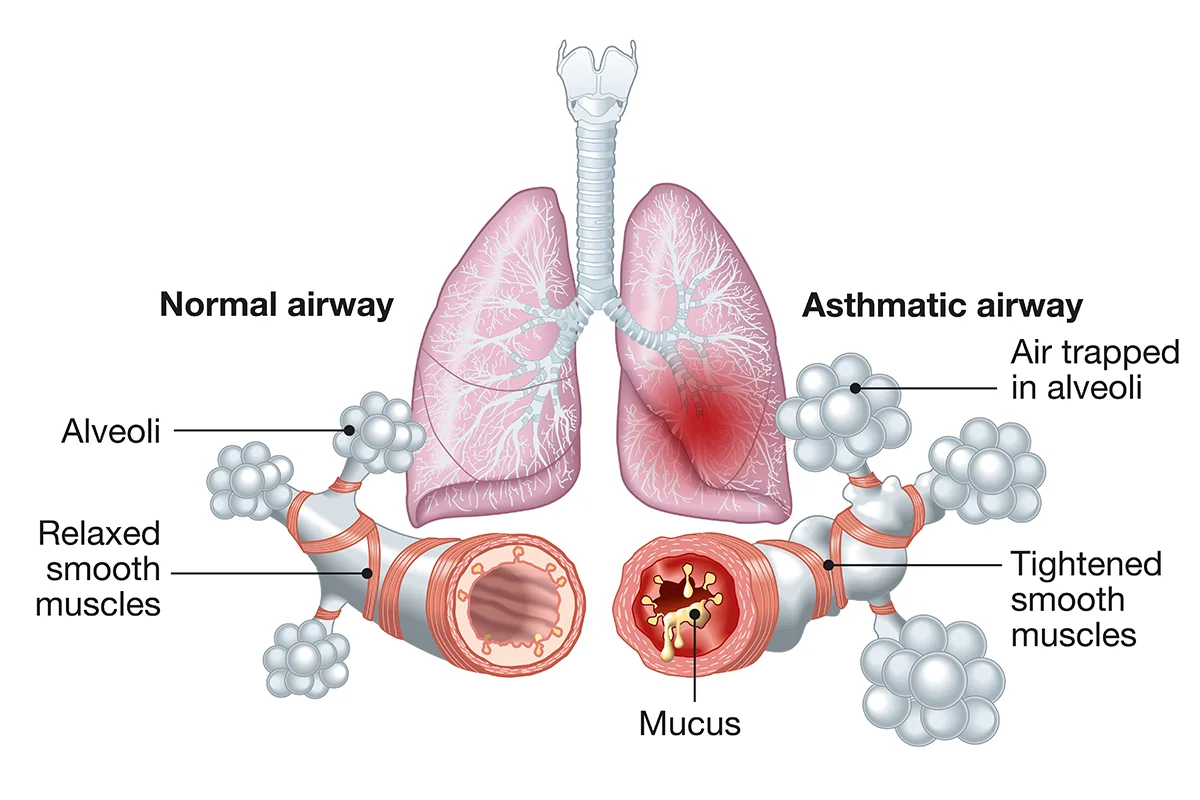
Visual differences between a normal airway and an asthmatic airway
Flare-ups, also known as asthma attacks, are a common part of having asthma. They're often followed by periods with no symptoms.
An asthma attack often starts with abnormal breathing, chest tightness and wheezing. This may be accompanied by a dry or wet cough and intercostal retractions (skin pulling between the ribs during breathing). Physical activity can make symptoms worse.
Asthma attacks may last for a few minutes, several hours or even days. In some instances, the attack may require medical attention. If you notice a bluish discoloration in your lips or face, have extreme difficulty breathing, drowsiness or a rapid pulse, seek medical attention immediately.
Risk factors for asthma
While anyone can develop asthma, certain factors may increase the likelihood of developing the condition. Allergies, obesity or a family history of asthma increases risk. Exposure to workplace chemicals, tobacco or air pollution also increases your risk of developing asthma. Your risk also increases if you're Black or Hispanic.
Diagnosing asthma
Depending on the type of asthma you have, you may work it a primary care doctor, a pulmonologist, allergist, or an ear, nose, and throat (ENT) specialist.
Diagnostic testing may include:
- Allergy tests to identify reactions to specific allergens that may trigger asthma
- Blood tests to measure certain antibodies produced by the immune system in response to asthma and particular allergens
- Lung function tests like pulmonary function tests (spirometry) and peak expiratory flow tests to evaluate how well air moves through the lungs
- Imaging tests like chest X-rays or CT scans so providers can examine the lungs and airways
An overview of asthma treatment options
Asthma treatments are tailored to each person. Working closely with your health care provider, you’ll develop a treatment plan designed to meet your specific needs. The goal is to prevent future asthma attacks, manage symptoms and plan steps to avoid triggers. Often treatments combine quick relief medications, also known as rescue inhalers, and controlled inhalers.
Rescue inhalers vs. controller inhalers
Rescue inhalers provide immediate, short-term relief from asthma symptoms. If you're having an asthma attack, this is the inhaler you reach for.
Controller inhalers are used daily and help with long-term symptom management.
Using an asthma action plan
Following an asthma diagnosis, your health care provider will work with you to develop a personalized asthma action plan. This will include details about your medications and triggers, along with a color-coded guide that outlines when and how much asthma medication to use based on your symptoms.
Plans often use color to help identify severity of an attack:
- Green: Your asthma is well controlled, and you’re not currently experiencing symptoms.
- Yellow: Your asthma is worsening, and you may be experiencing early symptoms or the onset of an attack.
- Red: Symptoms of an asthma attack are present, and you may require medical attention.
What are some complications from asthma?
Sometimes, if an asthma attack is serious enough, it can lead to complications. In addition, asthma and certain treatments used to manage the condition can result in complications including:
- Reduced lung function
- Diabetes
- Infections
- Hypertension (high blood pressure)
- Osteoporosis and fractures
- Sleep disorders, such as sleep apnea
Asthma prevention
Although there is no guaranteed way to prevent asthma, there are steps you can take to minimize exposure and lower your risk of asthma attacks. These steps can include:
- Avoiding secondhand smoke, workplace chemicals and other irritants
- Reducing pet dander by keeping pets off furniture and out of the bedroom
- Keeping your home clean and washing bedding regularly to help reduce dust and mold
- Keeping windows closed when pollen levels are high
- Taking asthma medications as directed by your health care provider
- Staying current on vaccinations to help prevent respiratory infections such as COVID-19, influenza and RSV