Gynecological cancers
Find a cancer specialistA gynecological cancer diagnosis can be an overwhelming experience – bringing on feelings of uncertainty for both you and your loved ones. Our comprehensive program is dedicated to providing you with care and support during this challenging time. We offer fast screenings to give you the answers you need, personalized treatment plans and palliative care to help ease your experience. Our leading-edge care is delivered with compassion, because your health is at the heart of everything we do.
What are gynecological cancers?
Gynecological cancers affect a woman’s reproductive organs, including the cervix, fallopian tubes, ovaries, uterus, vagina and vulva. Their symptoms are easy to overlook, so awareness and regular checkups are important when it comes to diagnosing these cancers early.
What are the symptoms of gynecological cancers?
Symptoms of gynecological cancer may be chronic or acute, and they can vary from person to person. Each type of gynecologic cancer has its own signs, but common symptoms include:
- Abnormal vaginal bleeding or discharge
- Bloating or abdominal discomfort, feeling full too quickly, difficulty eating or back pain
- Changes in urination or bowel movements
- Pelvic pain, pressure or cramping
- Itchiness around the vulva, burning or pain, or skin changes such as discoloration, rashes, sores or warts
When should you see a gynecologic oncologist?
You may need to see a gynecologic oncologist if your OB-GYN recommends it. Or you may seek one out if you have a family history of gynecologic cancers or notice new symptoms that you’re worried about. You may also consult with them about your risk factors or possible prevention strategies.
Use our online search tool to find a doctor near you and request an appointment.
What types of gynecological cancers exist?
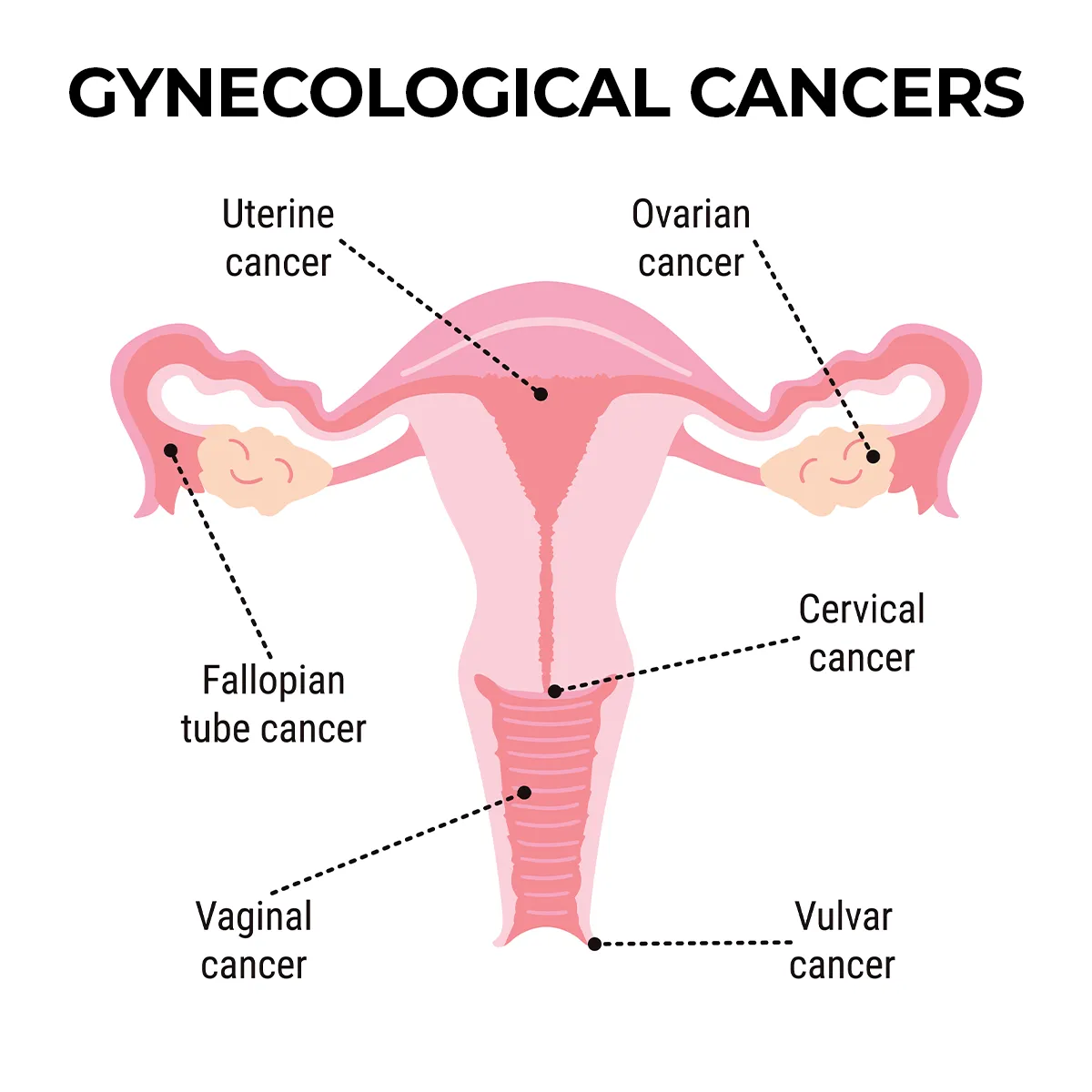
Our experts in gynecological oncology provide precise diagnosis and the latest treatments for all types of gynecologic cancers.
Our experts treat all types of cancers that affect the female reproductive systems.
Uterine cancer
Uterine cancer is the most common gynecologic cancer and is often discovered after abnormal bleeding. Most cases begin in the endometrial lining of the uterus. This cancer type becomes more common following menopause.
Ovarian cancer
Ovarian cancer represents 1% of all cancers diagnosed in the United States. It can be difficult to detect, and is often not found until later stages. Ovarian cancer may begin in the ovaries, or less commonly the fallopian tubes or peritoneum (the membrane lining your abdomen and pelvis). While there currently is no screening tool for ovarian cancer, we recommend a yearly gynecological exam so your provider can check for any abnormal growths.
Cervical cancer
Cervical cancer is most commonly diagnosed in women between the ages of 35 and 64. This cancer type begins in the cervix (the lower part of the uterus that attaches to the vagina). Regular ap smear screenings and the HPV vaccine are the most effect ways to reduce your risk.
Vaginal and vulvar cancers
Vaginal cancer is rare and often the result of cancer spreading from another area. It is found in the vagina (the passage from the vulva to the cervix). It happens most often in adults over the age of 60. Symptoms can include abnormal bleeding, constipation, discharge, painful and frequent urination, pelvic discomfort and constipation.
Vulvar cancer grows in the outer part of the genitals. It makes up less than 1% of all cancers and is most often diagnosed in adults age 65 and older. Typically, the first sign of this cancer is a lump or itchy sore.
Annual gynecological exams can help detect vaginal and vulvar cancers early on.
How are gynecologic cancers diagnosed?
The diagnosis of gynecologic cancers often begins with a pelvic exam or Pap smear. The following diagnostic tests may also be used.
- Biopsy
- Blood tests
- CT scan
- Endoscopy
- Genetic testing
- Laparoscopy
- MRI scan
- PET scan
- Ultrasound
How are gynecologic cancers treated?
At Aurora Health, our gynecologic oncologists offer many state-of-the-art treatments and will work with you to determine the best treatment plan for you.
Surgical treatments for gynecological cancers
Our gynecologic oncologists are experts at providing surgical treatments for cancer, including hysterectomy by laparoscopy and robotic surgery.
Nonsurgical cancer treatments
Our team can provide a full spectrum of nonsurgical cancer treatments including radiation therapy, chemotherapy or hormone therapy.
Hyperthermic intraperitoneal chemotherapy
Hyperthermic intraperitoneal chemotherapy (HIPEC) combines surgery and chemotherapy to remove visible tumors before applying a heated chemotherapeutic solution to treat remaining cancer cells.
Precision medicine for cancer
Precision medicine tailors cancer care for gynecologic oncology patients by considering a tumor’s specific characteristics, or molecular footprint.
Cancer rehabilitation
Cancer physical therapy can help counteract the negative effects of cancer treatment, such as weakness, stiffness or fatigue.
Fertility evaluation
A fertility evaluation with Aurora’s IVF and fertility experts can help you understand your options if you are undergoing gynecologic oncology treatment and want to preserve your fertility.
What is complementary care for gynecological cancer?
We treat you, not just the cancer. When you’re undergoing gynecologic cancer treatment, you need extra support, so we offer these types of complementary care:
- Acupuncture, Reiki, massage therapy, and aromatherapy to help with the side effects of cancer treatment
- Monthly support groups to ground you and give you opportunities to explore shared experiences
- Palliative care and pain treatment to address the side effects of cancer treatment
Research about gynecologic oncology
We deliver state-of-the-art care because of our emphasis on research. The more we learn, the more we can apply advanced gynecologic oncology treatments that help women survive a gynecological cancer diagnosis. Because of our commitment to research, you can take advantage of cancer clinical trials, which deliver care that isn’t widely available in Wisconsin.
Treatments for gynecologic cancer
Aurora’s gynecologic oncologists offer state-of-the-art gynecological cancer treatments, including hysterectomy by laparoscopy and robotic surgery. We also provide:
- A full spectrum of nonsurgical cancer treatments including radiation therapy, chemotherapy, or hormone therapy
- Cancer rehabilitation to counteract the negative effects of cancer treatment, such as weakness, stiffness, or fatigue
- A fertility evaluation with Aurora’s IVF and fertility experts to help preserve fertility for people undergoing gynecologic oncology treatment
- Precision medicine for cancer, which offers hope and a new option for women with advanced gynecologic cancers
- Hyperthermic intraperitoneal chemotherapy (HIPEC), an innovative combination of surgery and chemo. The surgery starts by removing all visible tumors. Then a heated chemotherapy solution is placed in the open cavity to treat any remaining cancer cells. Then the chemo medication is drained, and the incision is closed.
Comprehensive gynecologic cancer care

Aurora Health Care has a world-class team of gynecologic oncology specialists who expertly treat gynecologic cancers. Our team works with you to create a plan tailored to your specific needs and goals.
Highlights of our program at Aurora include:
- Subspecialty expertise: Cancer care requires a strong partnership among many health specialists. Our program features a weekly meeting with all doctors involved in gynecologic cancer care. This all-hands-on-deck approach delivers better outcomes for you.
- Nationally recognized care: Aurora St. Luke's Medical Center earned U.S. News & World Report's highest rating for gynecological cancer surgery, recognizing our advanced surgical expertise, innovative treatment options and commitment to exceptional patient outcomes.
- Convenience: Every member of your treatment team stays up-to-date on your progress, thanks to Aurora’s electronic health record. And because we offer outreach clinics throughout the state, you may be able to receive follow-up care closer to home.
- Support: Aurora offers you the support of a nurse navigator. This person serves as your partner, helping ensure that every test and procedure is completed so you don’t miss a step on your road to recovery from gynecological cancer.